A toll, not a lock
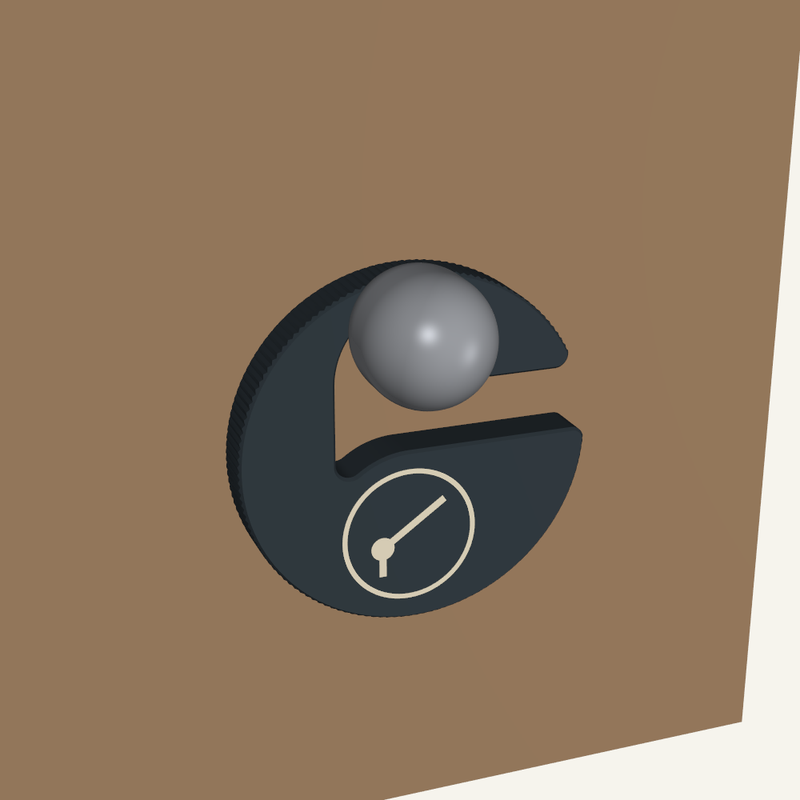
A printed token hangs on the cabinet, the drawer, wherever your late-night habit lives. Take it off and tap your phone to it. You hear yourself, from a morning after, saying what the last few times actually cost. You can always go in.

Try it. Everything here is made up, and nothing is sent anywhere.
Passing buys
Reading a made-up line doesn't do it. Record a line of your own and tap again, and the demo plays it back. It stays in this tab's memory and is gone when you close it.
The costs and the quotes in this demo are invented for illustration. The real thing uses only what you log yourself.
The real booth is live, with setup, recording, a morning-after log, and backups. It stores everything on your phone and can't upload.
A made-up example
You don't need voice cloning to hear real numbers in your own voice. The morning after you go in, you tap the token again and spend ten seconds saying what it cost. That recording is the toll next time. The data and the voice are the same thing.
It plays what the last times cost, and ends on what you said you'd rather have. No streaks, and nothing ever resets. "It was worth it" is an allowed answer.
Read this before believing a word of it
Nobody has tested this. The evidence around it is honest about small effects, and that changed the design.
A pause and an easy exit work. In a field study of the one sec app, opens of target apps fell 57% over six weeks. A follow-up found the option to dismiss was the strongest part. Grüning et al., PNAS 2023. Phone apps, not alcohol. One author made the app.
People ask to be bound. In Chennai, most of 229 rickshaw drivers gave up real money to have sobriety incentives set on themselves. Schilbach, AER 2019. Daytime drinking fell, overall drinking didn't change.
The message itself may not be the active part. That same study found the deliberation message had no measurable effect. So "I'll pass" is the biggest thing on the screen. If the voice turns out to be decoration, the toll still has to work.
Positive beats scary. Future thinking reduces how much people discount later rewards, but only the positive kind (g = 0.64 against −0.03 for neutral or negative). So the toll ends on what you want. Ye et al., 2022. A lab measure of patience, not drinking.
If-then plans barely dent alcohol. d = −0.14 for weekly drinking, and no effect at all on heavy episodes. And a serious, well-tested drinking app got about one to two units a week. Cooke et al., 2023; Oldham et al., 2024.
Your own voice. I couldn't find one trial testing whether hearing your own recording changes this kind of behavior. Nearby: people rate their own voice as more attractive in blind tests, and one brain imaging study with 21 people. Hughes & Harrison, 2013; Jo et al., 2024. This is the bet.
Full notes, with what I could and couldn't verify: docs/RESEARCH.md.
Real, named cases. None of them used a Toll Booth, because nobody has.
Frederik Riedel's app interrupts you before an app opens. Then the study he co-authored took it apart, and found the message he'd built did nothing measurable. Being offered an exit did the work.
A passive NFC magnet that blocks your apps until you tap it again. It shows people pay for a physical object in a self-control loop. It's a lock, pointed at your phone. This uses the same chip for the opposite job.
Philippine smokers could stake their own savings on a nicotine test. It worked: 3.3 to 5.8 points more passed at six months. Only about 11% signed up, and 66% of them still failed. A stronger device gets fewer takers.
Men who'd get paid either way chose to be paid only if sober, at a cost to themselves. As clean a demonstration as exists that people want this, with nobody shaming them into it.
In New Zealand, 24 people wrote messages to their later drinking selves. One said only "DO NOT PUNCH", then a name. They looked nothing like what professionals write. We don't know yet whether it helped.
A timed container that stays shut until the timer ends. If you want to be stopped rather than reminded, that's the honest alternative to this project.
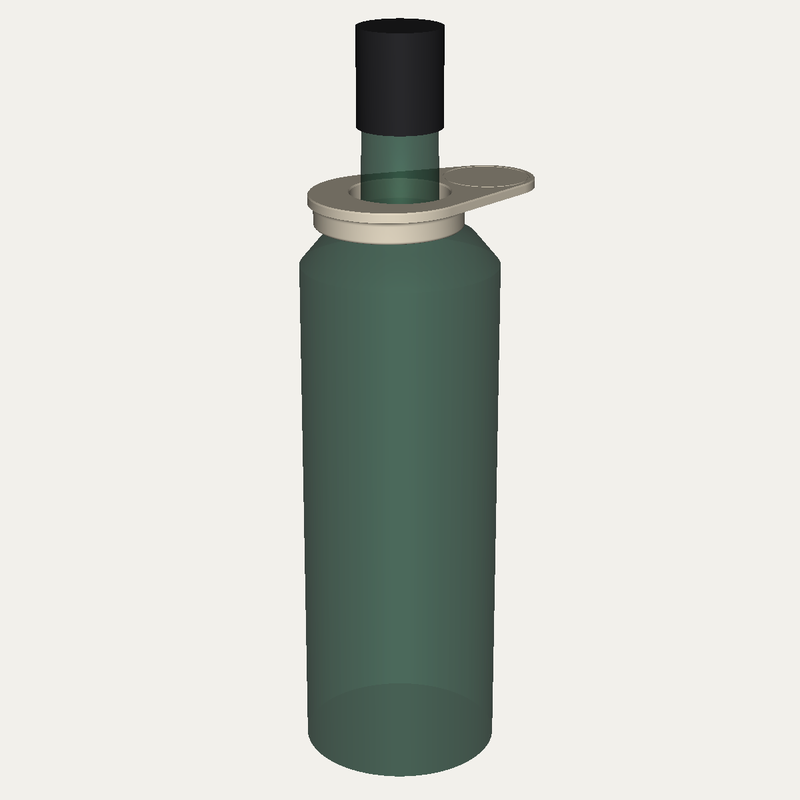
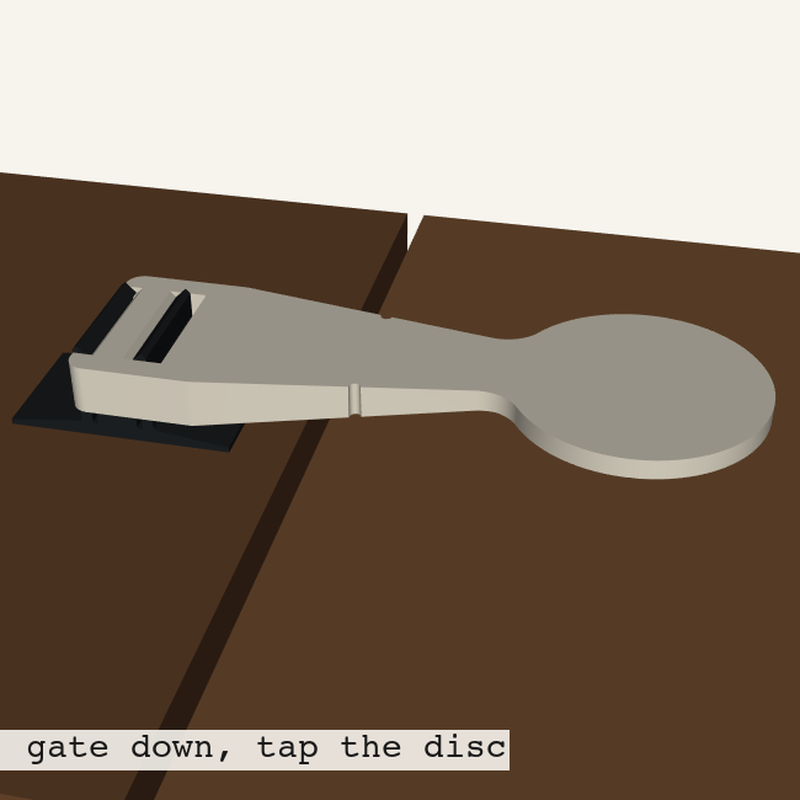
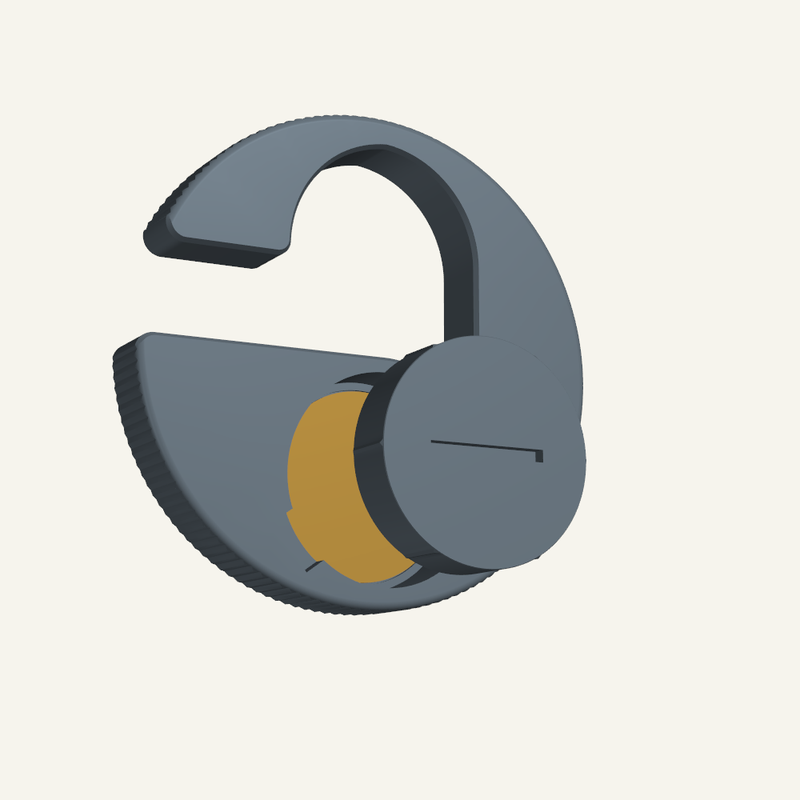
Four designs, each built in code
The toll sits in your palm, you tap it away from the door, and you have to decide where to put it down. Nothing's stuck on anything, and metal doors stop mattering.


| Size | 77 × 11 mm (72 mm for a 25 mm tag) |
|---|---|
| Wall over the tag | 1.0 mm, set by a parameter |
| Meshes | Watertight, no supports, no overhang past 45° with the inlay |
| Slicer estimate | About 1 h 16 min and 45 g on a P1S, two colors |
| Test print first | A 26-minute coupon to check that your phone reads your tag |
| Parts | About $2, no battery, no metal |
MIT for the code, CERN-OHL-P for the hardware, CC BY for the docs.
If this is heavier than a toll.
If you've been drinking heavily for a while, stopping suddenly can be dangerous. NIAAA warns that withdrawal can be life-threatening, and doctors can make it safer. Please talk to one first.
In the US, SAMHSA's National Helpline is free, confidential and open 24/7 in English and Spanish: 1-800-662-4357. For a crisis, call or text 988. For gambling, 1-800-GAMBLER.
If food carries shame or fear for you, this isn't the right tool, and a person who knows eating disorders will help more. NIMH has a starting point. It never asks about calories or weight.
This is an open question and the reason this page exists. I don't know what people would actually use this for. A cabinet? A wallet? The door to the garage?
Tell me the object and the hour. If you print one, I'd love to hear what broke.